Room XI of XII
Postmodernism
Ornament and history come back, with a wink: pediments split in half, giant keystones, colour and deliberate contradictions.
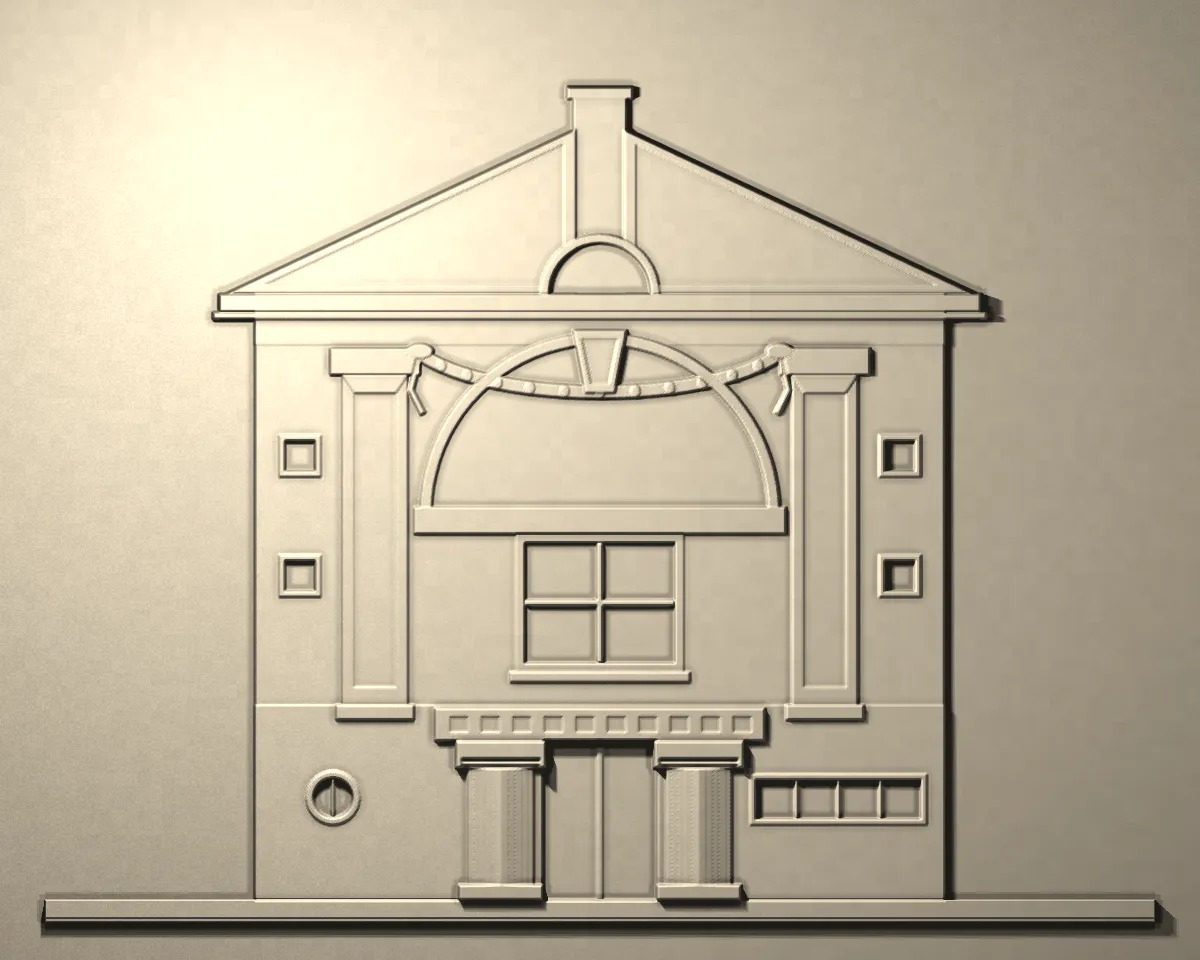
On this cast
How to spot it from the street
- Classical elements used flat, huge or broken
- Bold colours and painted bands
- Symmetry set up and then broken
- Styles mixed on purpose
Where it came from
In 1966 Robert Venturi published Complexity and Contradiction in Architecture and answered Mies van der Rohe's 'less is more' with 'less is a bore'. His house for his mother in Philadelphia (completed 1964) has a split gable, a chimney pushed through it and an arch drawn on the façade that carries nothing.
Charles Jencks popularised the label with his book The Language of Post-Modern Architecture (1977). Michael Graves's Portland Building (1982) and Philip Johnson's AT&T Building (1984), with its 'Chippendale' top, made it famous. Read it as quotation: classical parts appear, but enlarged, flattened, coloured and arranged so that you notice them.
Famous Postmodernism buildings

Vanna Venturi House
Philadelphia, United States · 1962–1964 · Robert Venturi
Built for the architect's mother; a split gable, applied arch and oversized chimney make a manifesto out of a small house.
Photo: Smallbones, Public domain, via Wikimedia Commons

Portland Building
Portland, Oregon, United States · 1980–1982 · Michael Graves
Municipal offices with giant stylised pilasters and keystone; listed on the National Register in 2011, re-clad 2017–2020.
Photo: Flickr.com user "philosophygeek", CC BY-SA 2.0, via Wikimedia Commons

550 Madison Avenue (AT&T Building)
New York, United States · 1978–1984 · Philip Johnson and John Burgee
Pink-granite tower with a 'Chippendale' broken pediment on top; later Sony's US headquarters.
Photo: Martin Dürrschnabel, CC BY-SA 2.5, via Wikimedia Commons