Room IX of XII
Modernism
No ornament, no historical quotes: a concrete or steel frame, white walls, long windows and a flat roof. Form follows function.
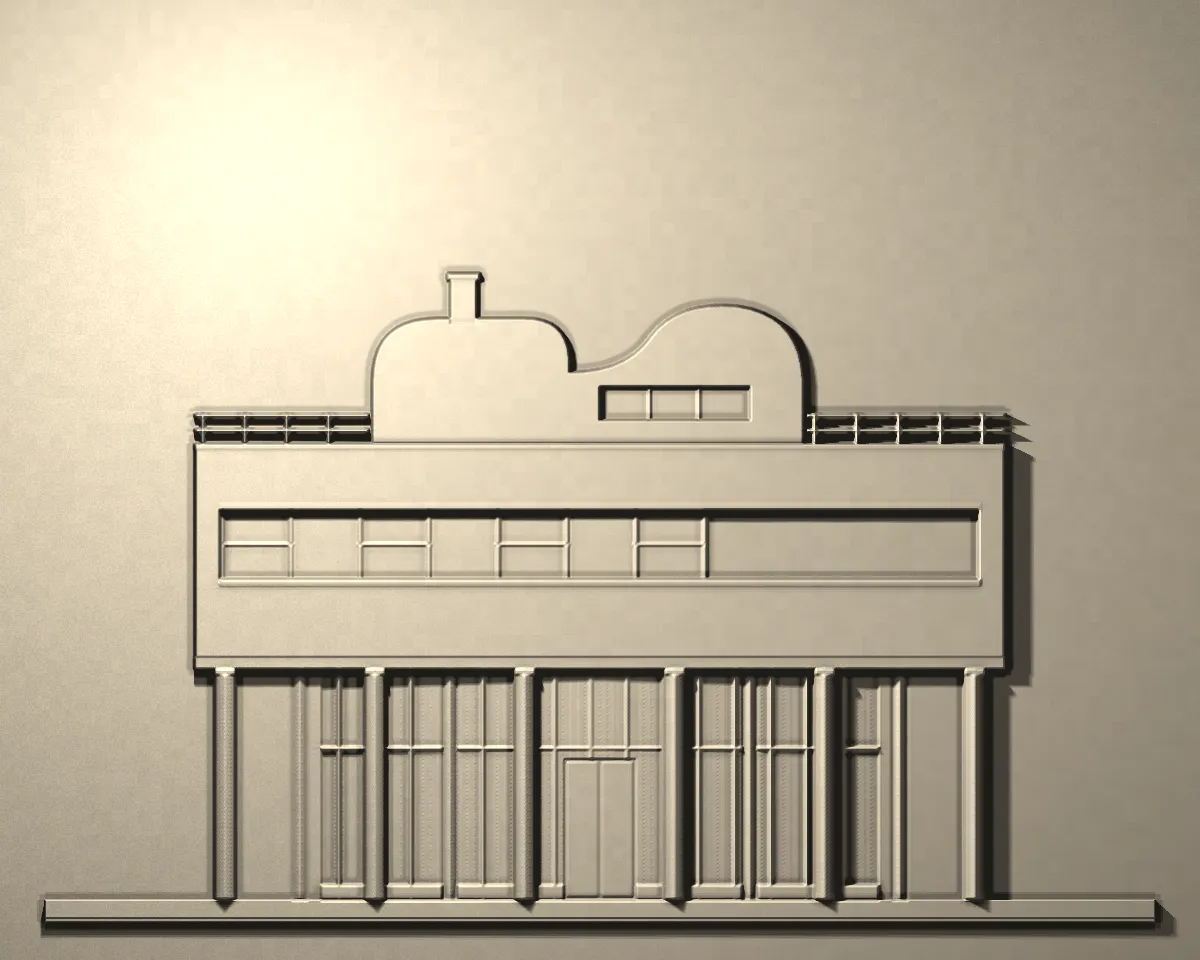
On this cast
How to spot it from the street
- Flat roof, smooth white or glass walls
- Long horizontal ribbon windows
- No ornament at all
- Often lifted on slim columns (pilotis)
Where it came from
After the First World War architects in Germany, France and the Netherlands rejected ornament outright. Walter Gropius founded the Bauhaus in 1919, and Le Corbusier set out his 'Five Points of a New Architecture' in the 1920s: pilotis, a free plan, a free façade, the ribbon window and the roof garden. His Villa Savoye (1928–31) is the five points made into a house.
A 1932 exhibition at the Museum of Modern Art in New York called it the International Style, and after 1945 it spread everywhere, from social housing to corporate glass towers. Its trick is the frame: once columns carry the floors, the walls can be thin, the windows long and the ground floor open.
Famous Modernism buildings

Bauhaus Building
Dessau, Germany · 1925–1926 · Walter Gropius
The school's own building: glass curtain wall on the workshop wing, pinwheel plan; UNESCO World Heritage.
Photo: JensKunstfreund, CC BY-SA 4.0, via Wikimedia Commons

Le Corbusier House, Weissenhof Estate
Stuttgart, Germany · 1927 · Le Corbusier and Pierre Jeanneret
A double house on pilotis showing the Five Points, built for the Werkbund's 1927 model estate (organised by Mies van der Rohe); now the Weissenhof Museum. Chosen instead of Villa Savoye, for which no freely licensed photo is available.
Photo: Andreas Praefcke, CC BY-SA 4.0, via Wikimedia Commons

Seagram Building
New York, United States · 1954–1958 · Ludwig Mies van der Rohe with Philip Johnson
Bronze-and-glass tower set back behind an open plaza; the model corporate International Style skyscraper.
Photo: dandeluca, CC BY 2.0, via Wikimedia Commons