Room VIII of XII
Art Deco
Machine-age glamour: setbacks like ziggurats, unbroken vertical piers, zigzags and sunbursts in bronze and polished stone.
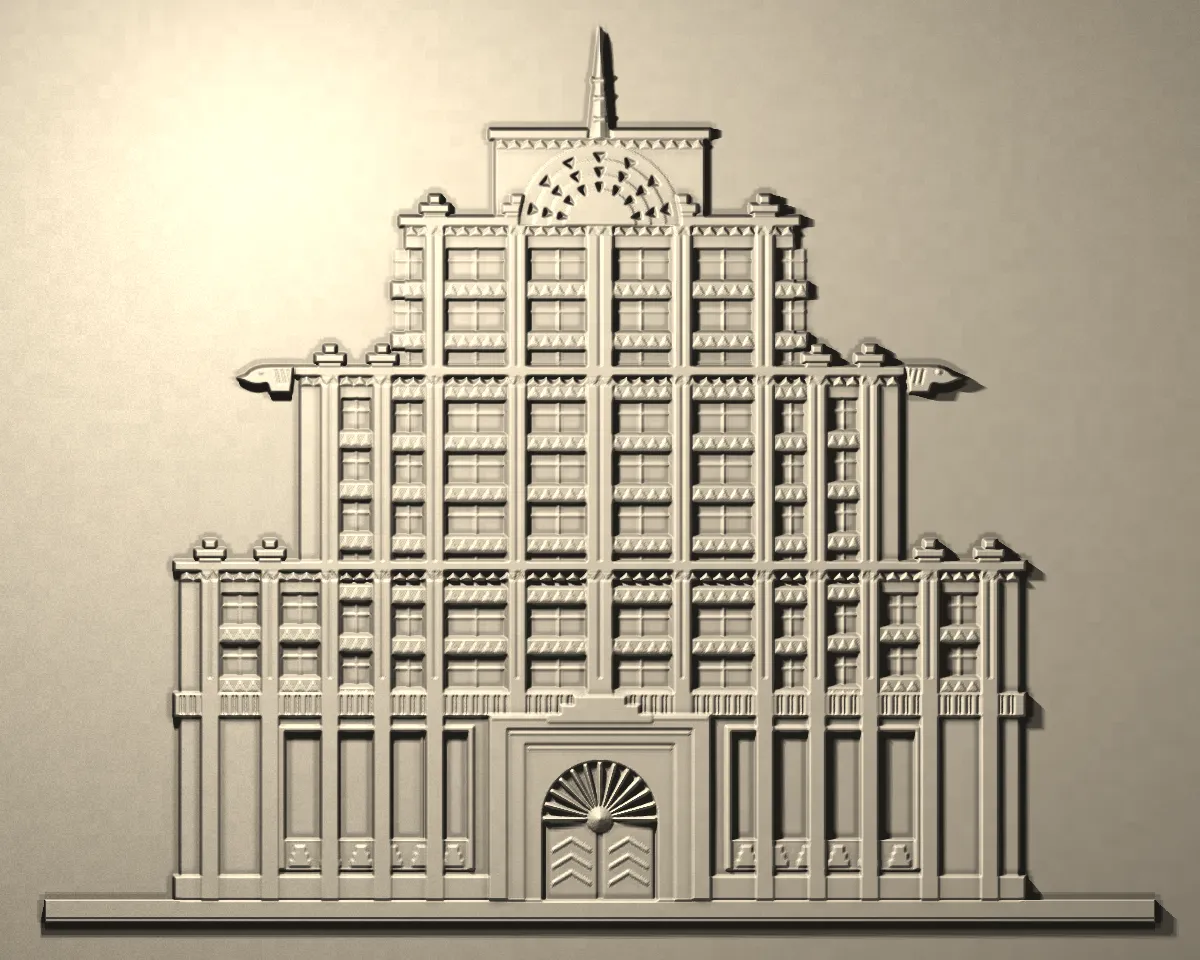
On this cast
How to spot it from the street
- Stepped setbacks
- Strong unbroken verticals
- Zigzags, chevrons and sunbursts
- Rich materials at the entrance: bronze, marble, terrazzo
Where it came from
The style matured before the First World War and takes its name from the 1925 Paris Exposition internationale des Arts décoratifs et industriels modernes, though the label 'Art Deco' only caught on in the 1960s. Its geometric ornament came from Cubism, Egyptian finds and the speed of cars and liners.
In New York it met the skyscraper. The 1916 zoning law made tall buildings step back as they rose so that light could reach the street, and architects turned the rule into the wedding-cake profile of the Chrysler and Empire State buildings. Piers run unbroken to the top, spandrels between the windows carry chevrons, and the crown is lit up at night.
Famous Art Deco buildings
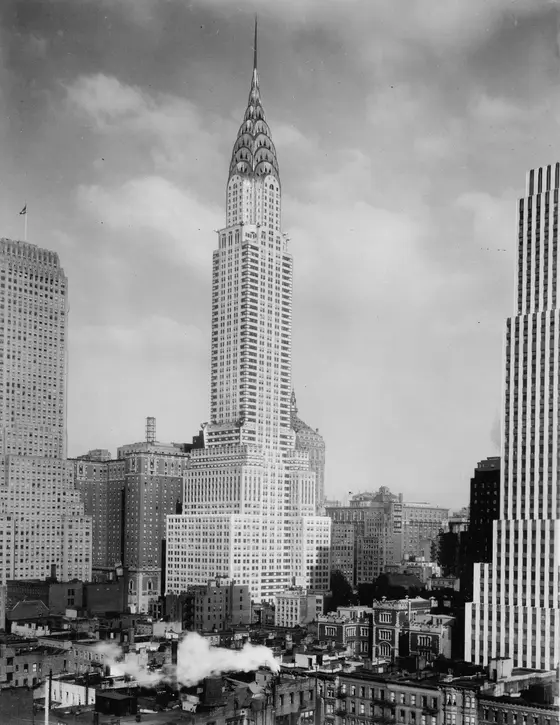
Chrysler Building
New York, United States · 1928–1930 · William Van Alen
Stainless-steel crown of sunburst arches; the world's tallest building for 11 months until the Empire State Building.
Photo: Detroit Publishing Co., Library of Congress, Public domain, via Wikimedia Commons

Hoover Building
London (Perivale), United Kingdom · opened 1933 (later extensions) · Wallis, Gilbert and Partners
A factory dressed like a cinema palace: white façade, coloured faience accents, tall corner towers; Grade II* listed, now apartments.
Photo: Ethan Doyle White, CC BY-SA 4.0, via Wikimedia Commons

Colony Hotel
Miami Beach, United States · 1935 · Henry Hohauser
Ocean Drive hotel with a vertical neon sign fin; part of the Miami Beach Architectural (Art Deco) District.
Photo: Ad Meskens, CC BY-SA 3.0, via Wikimedia Commons