Room III of XII
Gothic
Pointed arches, rib vaults and flying buttresses let the wall dissolve into glass. The whole building pulls upward.
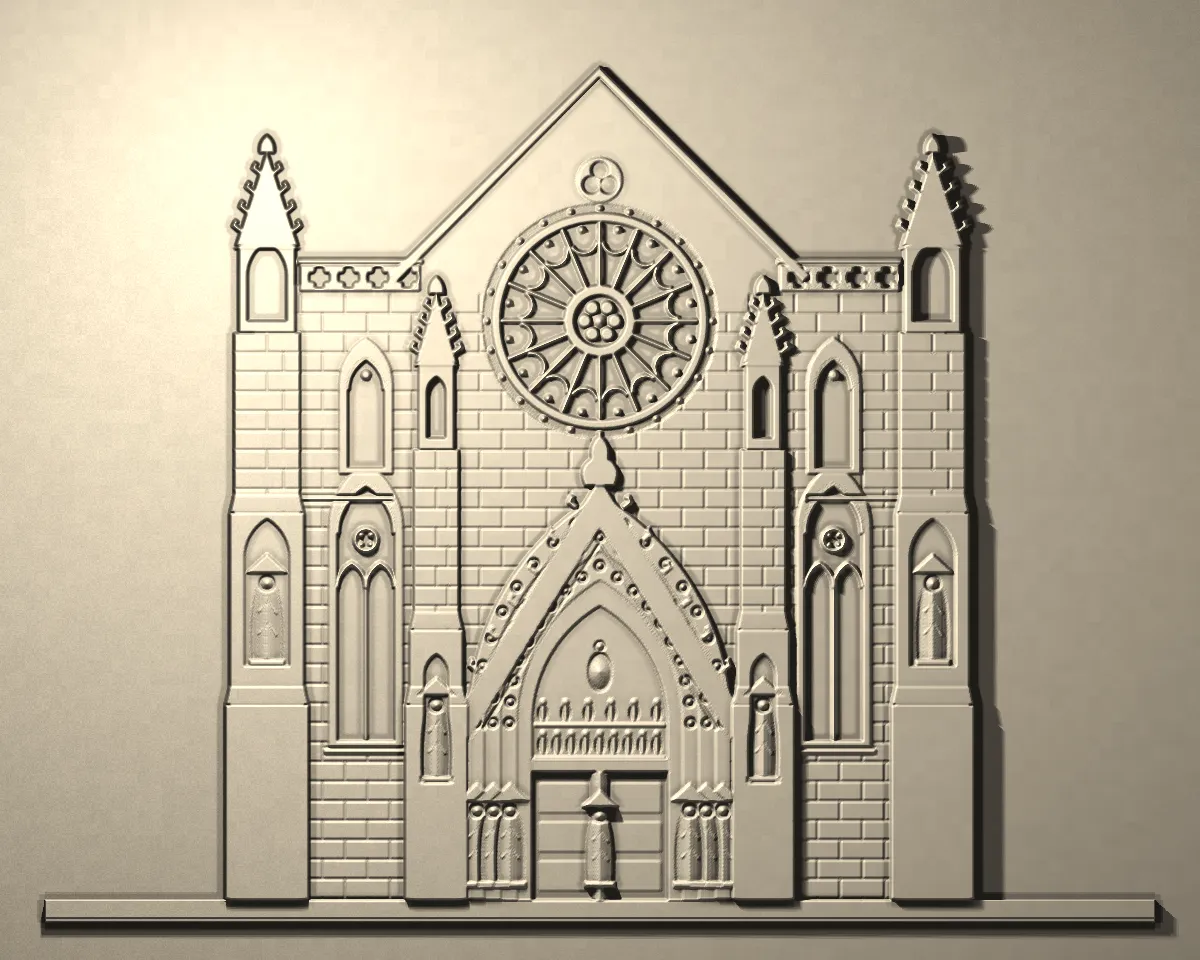
On this cast
How to spot it from the street
- Pointed arches everywhere
- Rose windows and stone tracery
- Buttresses and pinnacles along the sides
- Steep gables and a strong vertical pull
Where it came from
Gothic began with one choir: Abbot Suger rebuilt the east end of Saint-Denis between 1140 and 1144, joining pointed arches, rib vaults and wide windows into a church filled with coloured light. Within a century the cathedrals of Chartres, Reims and Amiens had pushed the system to its limits.
The trick is in the structure. A pointed arch pushes less sideways than a round one, and the push that remains is caught by buttresses outside the wall, often by flying buttresses that leap over the aisles. The wall between them carries little, so it can become tracery and stained glass. 'Gothic' itself was an insult: Renaissance writers blamed the style on the barbarian Goths.
Famous Gothic buildings

Notre-Dame de Paris
Paris, France · 1163 – c. 1345
Pioneering flying buttresses and great rose windows; restored after the fire of 2019 and reopened in December 2024.
Photo: DXR, CC BY-SA 3.0, via Wikimedia Commons

Chartres Cathedral
Chartres, France · mostly 1194–1220
High Gothic model: UNESCO notes nave and choir rebuilt from 1194 and stained glass of c. 1210–1250; west front keeps the 12th-century Royal Portal.
Photo: Dcconsta, CC BY-SA 3.0, via Wikimedia Commons

Cologne Cathedral
Cologne, Germany · 1248–1473, completed 1842–1880 · Master Gerhard (first master builder); finished by Ernst Friedrich Zwirner and Richard Voigtel
UNESCO: begun 1248 and not completed until 1880 to the medieval plans; the twin-spired west front is one of the largest church façades in the world.
Photo: Adam Jones, Ph.D., CC BY-SA 3.0, via Wikimedia Commons