Room VII of XII
Art Nouveau
A deliberate break with history: lines borrowed from plants, whiplash curves in iron and stone, and new materials shown off.
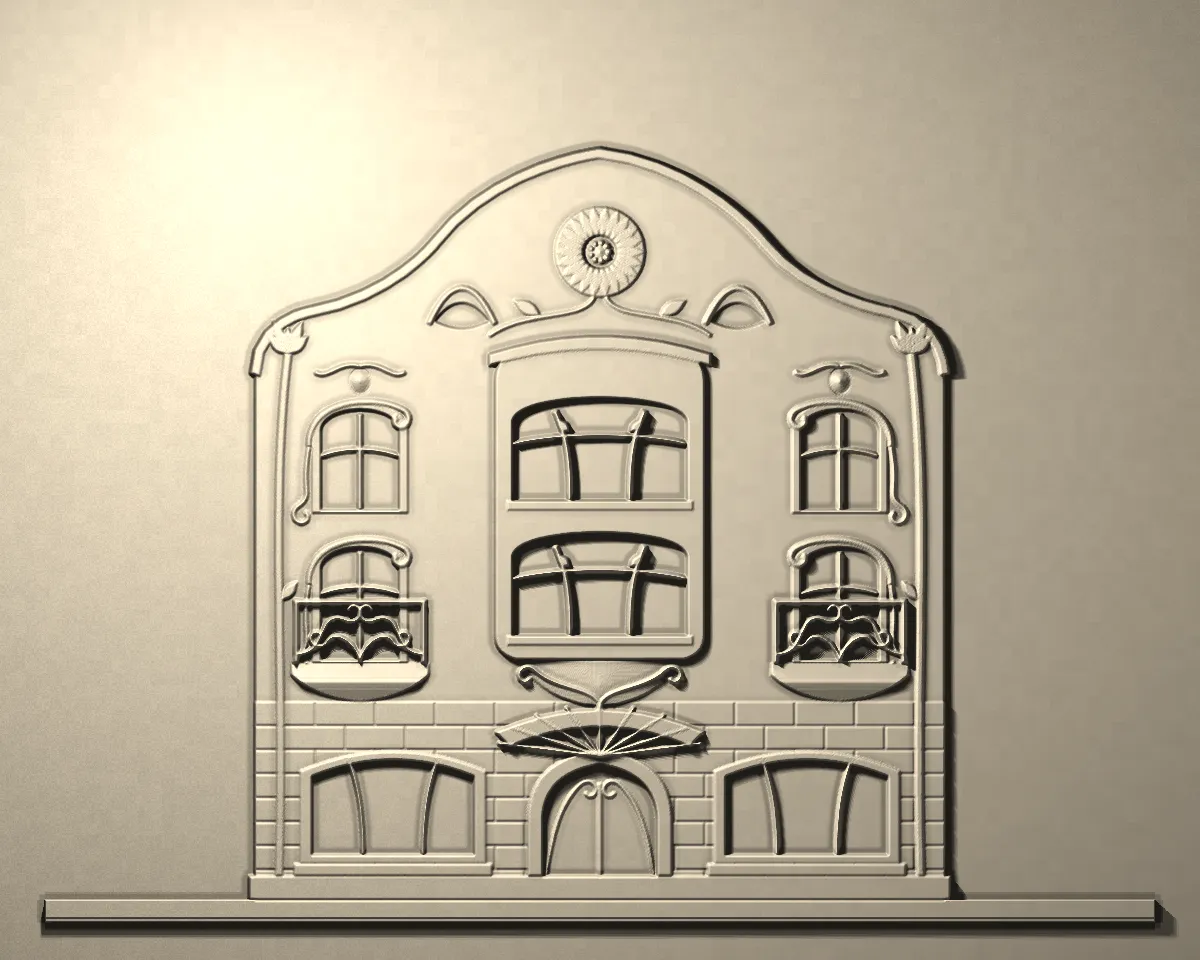
On this cast
How to spot it from the street
- Long whiplash curves and plant motifs
- Curved, parabolic or horseshoe windows
- Decorative wrought iron and glass
- Wavy gables and organic doorways
Where it came from
Victor Horta's Hôtel Tassel in Brussels (1892–93) is usually taken as the first Art Nouveau house: its iron columns sprout like stems and the curves run from the floor mosaic up the walls. Within a decade the style had a name in every city: Jugendstil in Germany, Secession in Vienna, Modernisme in Barcelona, Stile Liberty in Italy.
Instead of the orders, Art Nouveau drew on nature: flowers, stalks, insects and the long 'whiplash' curve. Iron and glass are bent and displayed, windows take parabolic or horseshoe shapes, and the façade is often asymmetric. It burned out fast, and by 1910 it already looked dated.
Famous Art Nouveau buildings

Hôtel Tassel
Brussels, Belgium · 1892–1893 · Victor Horta
Town house for professor Émile Tassel; UNESCO World Heritage (2000) with three other Horta houses.
Photo: Karl Stas, CC BY-SA 3.0, via Wikimedia Commons

Secession Building
Vienna, Austria · completed 1898 · Joseph Maria Olbrich
Exhibition hall built as the manifesto of the Vienna Secession artists, crowned by a gilded openwork dome of laurel leaves.
Photo: Thomas Ledl, CC BY-SA 4.0, via Wikimedia Commons

Casa Batlló
Barcelona, Spain · 1904–1906 · Antoni Gaudí
Catalan Modernisme remodelling of an older house: bone-like balconies, mosaic façade and a dragon-back roof.
Photo: ChristianSchd, CC BY-SA 3.0, via Wikimedia Commons